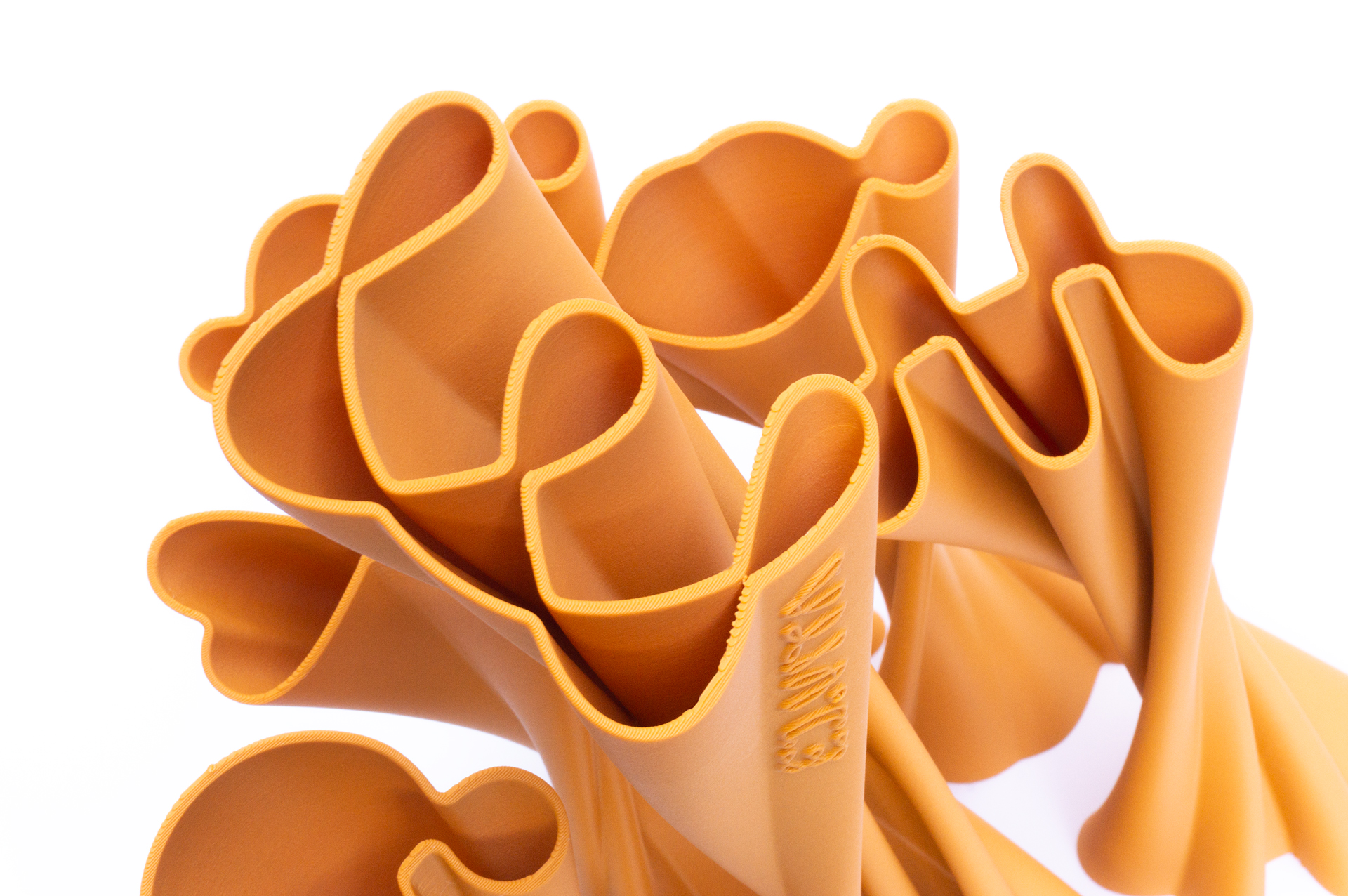
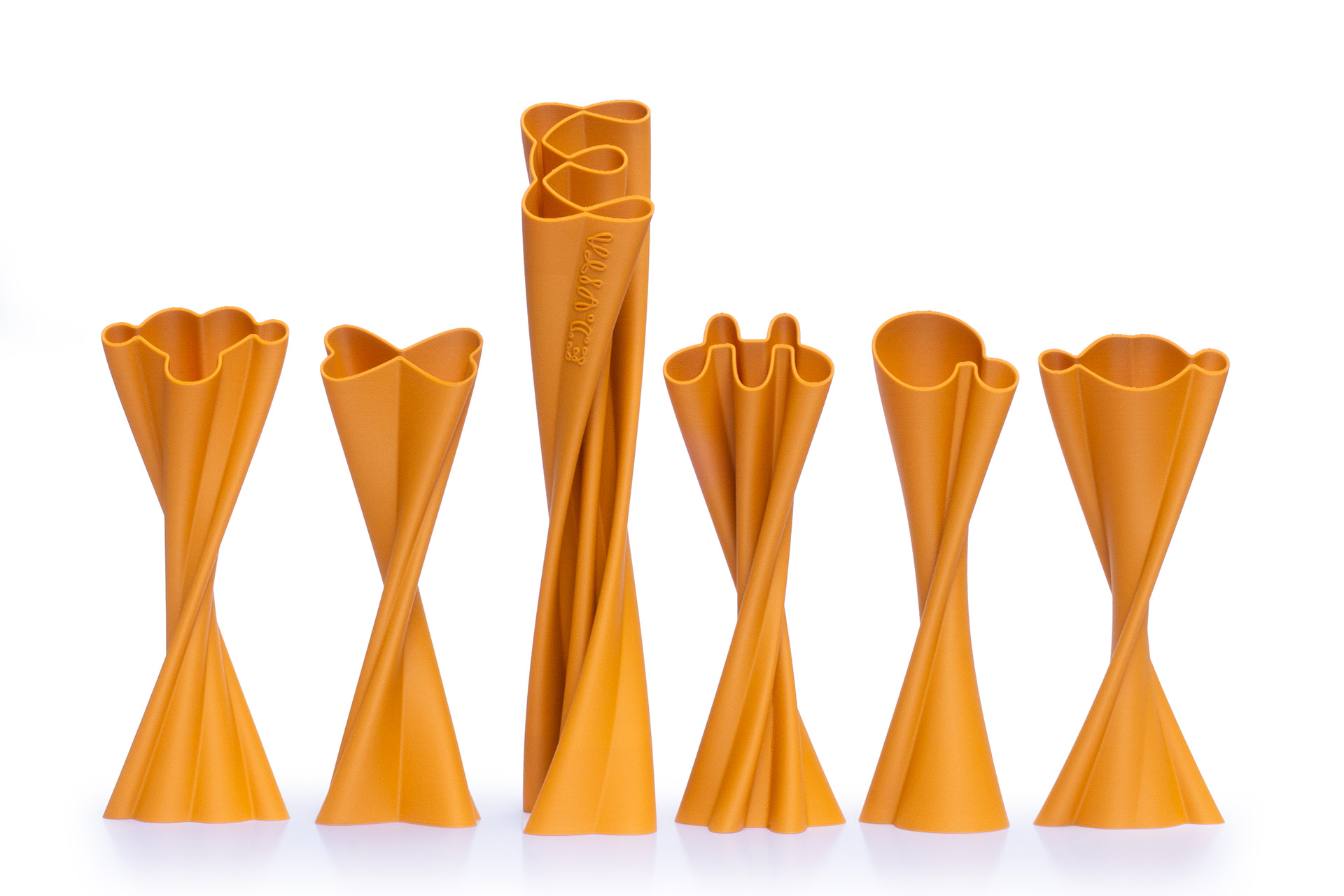
Top view of the ED.VITA trophies arranged in a random pattern, showing clear silhouettes of one large and five smaller trophies, highlighting the elegant extruded logo forms and sustainable PLA-wood material for the Sustainability in Education Award.
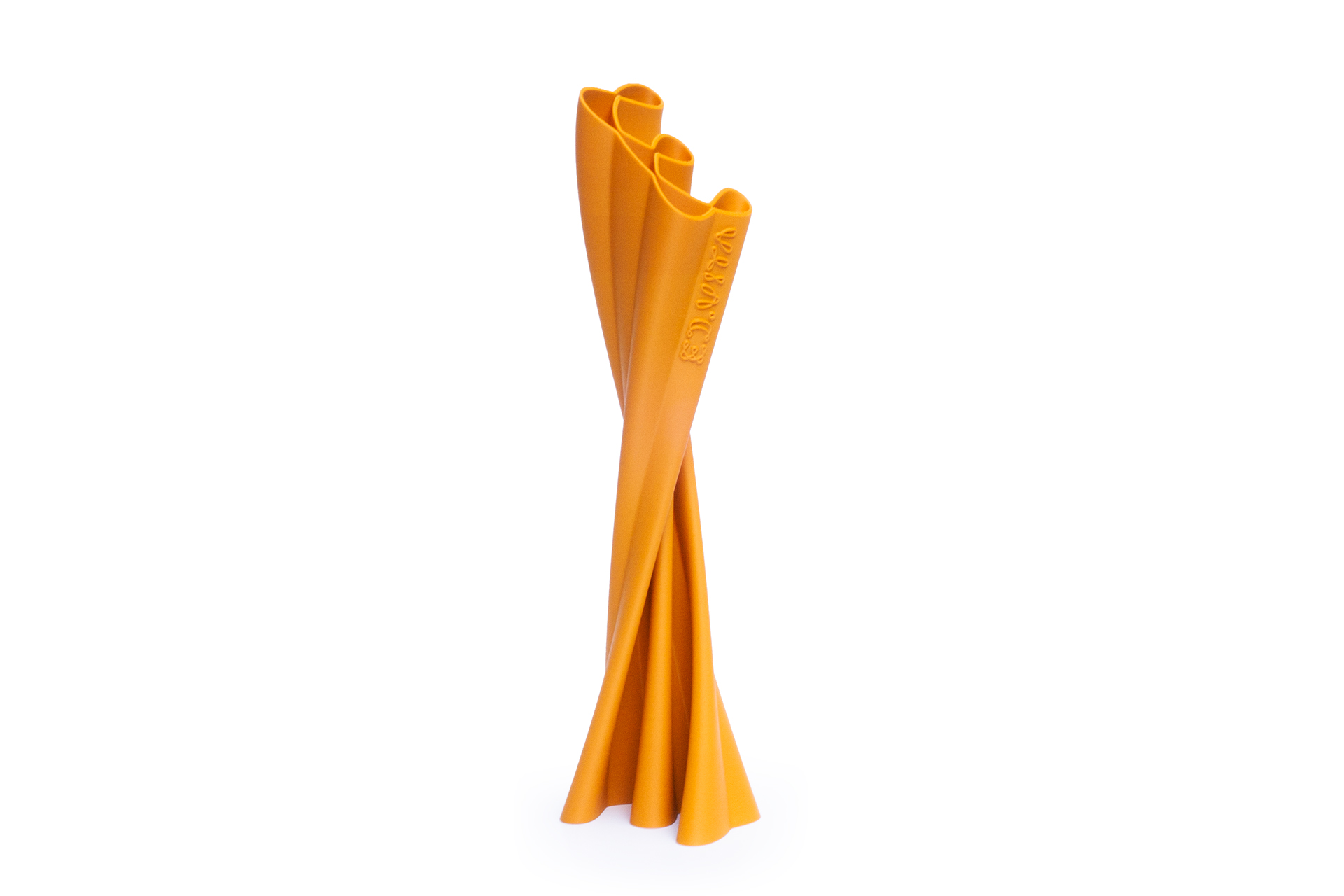
3D printed ED.VITA trophy in sustainable PLA-wood composite, suitable for industrial composting, featuring extruded logo form with rotation, elegant, lightweight, and prestigious design for the Sustainability in Education Award.
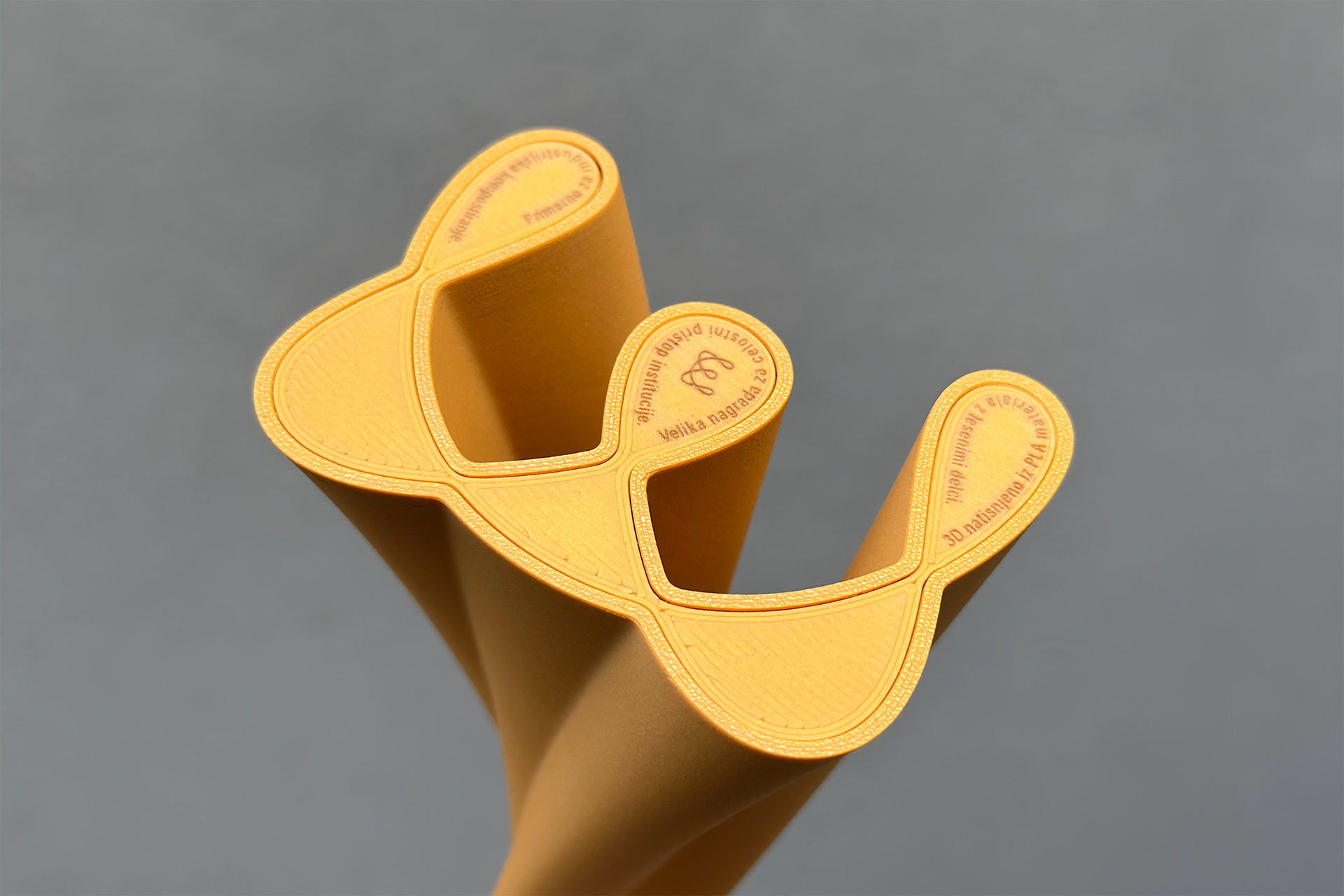
Bottom view of 3D printed ED.VITA trophy featuring laser inscription on the importance of the Sustainability in Education Award and composting instructions, reflecting responsible and sustainable design.
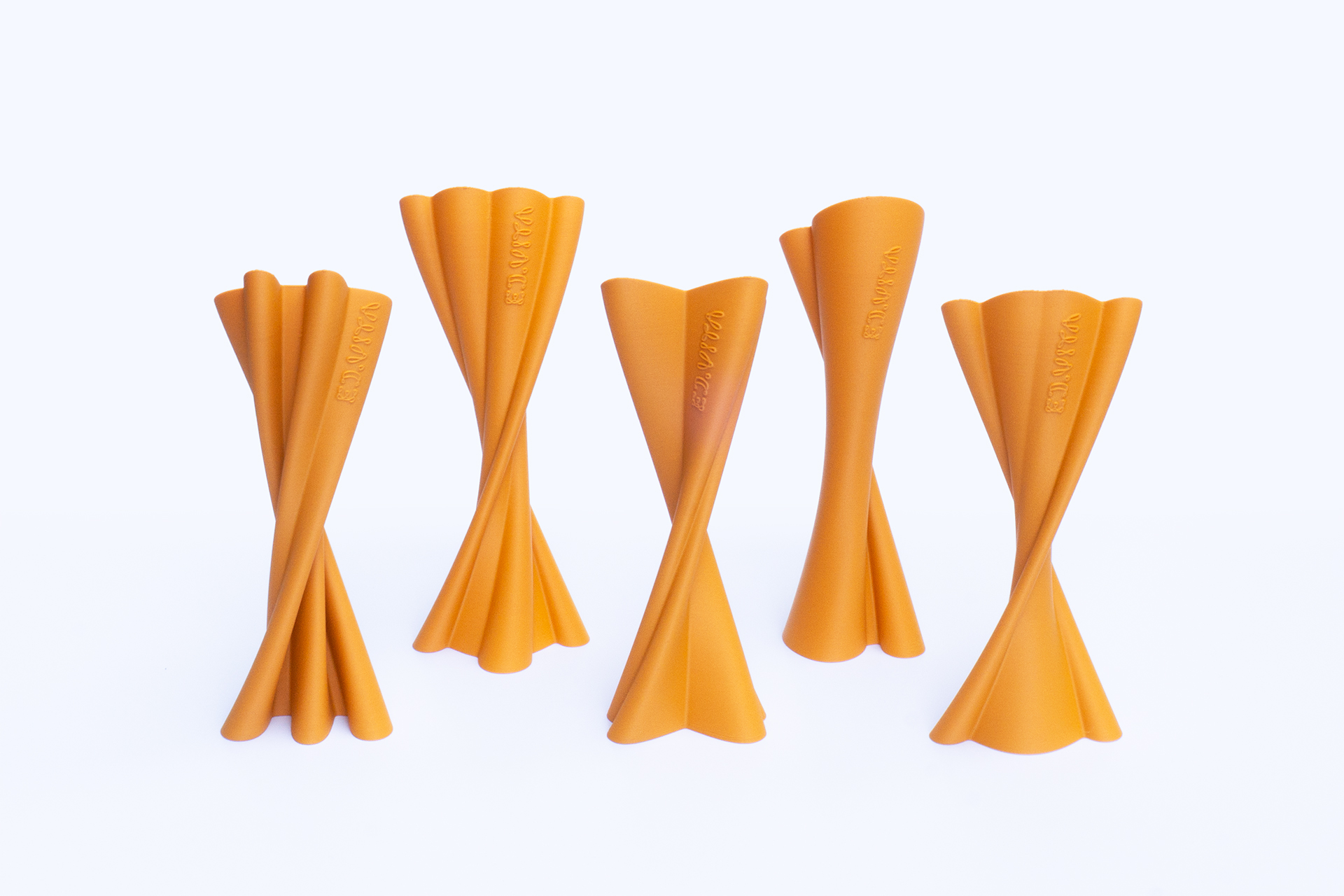
3D printed ED.VITA trophy in sustainable PLA-wood composite, suitable for industrial composting, featuring extruded logo form with rotation, elegant, lightweight, and prestigious design for the Sustainability in Education Award, including one large trophy and five smaller awards representing individual thematic categories.
3D printed ED.VITA trophies displayed together, featuring one large main award and five smaller thematic trophies, showcasing extruded logo forms, elegant line design, and sustainable PLA-wood material suitable for industrial composting for the Sustainability in Education Award.
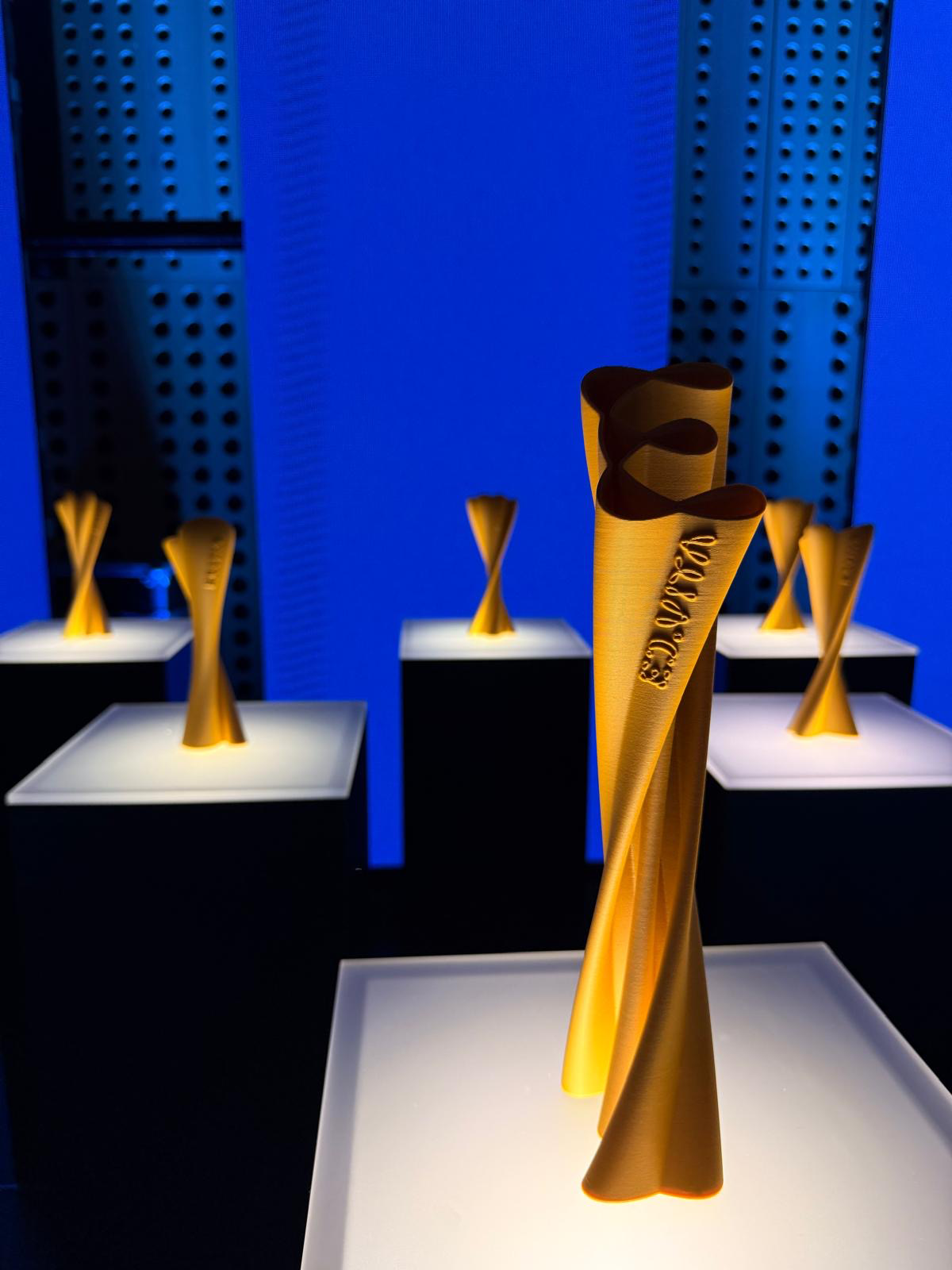
A photo of 3D printed ED.VITA trophies on display at the Sustainability in Education Award ceremony.
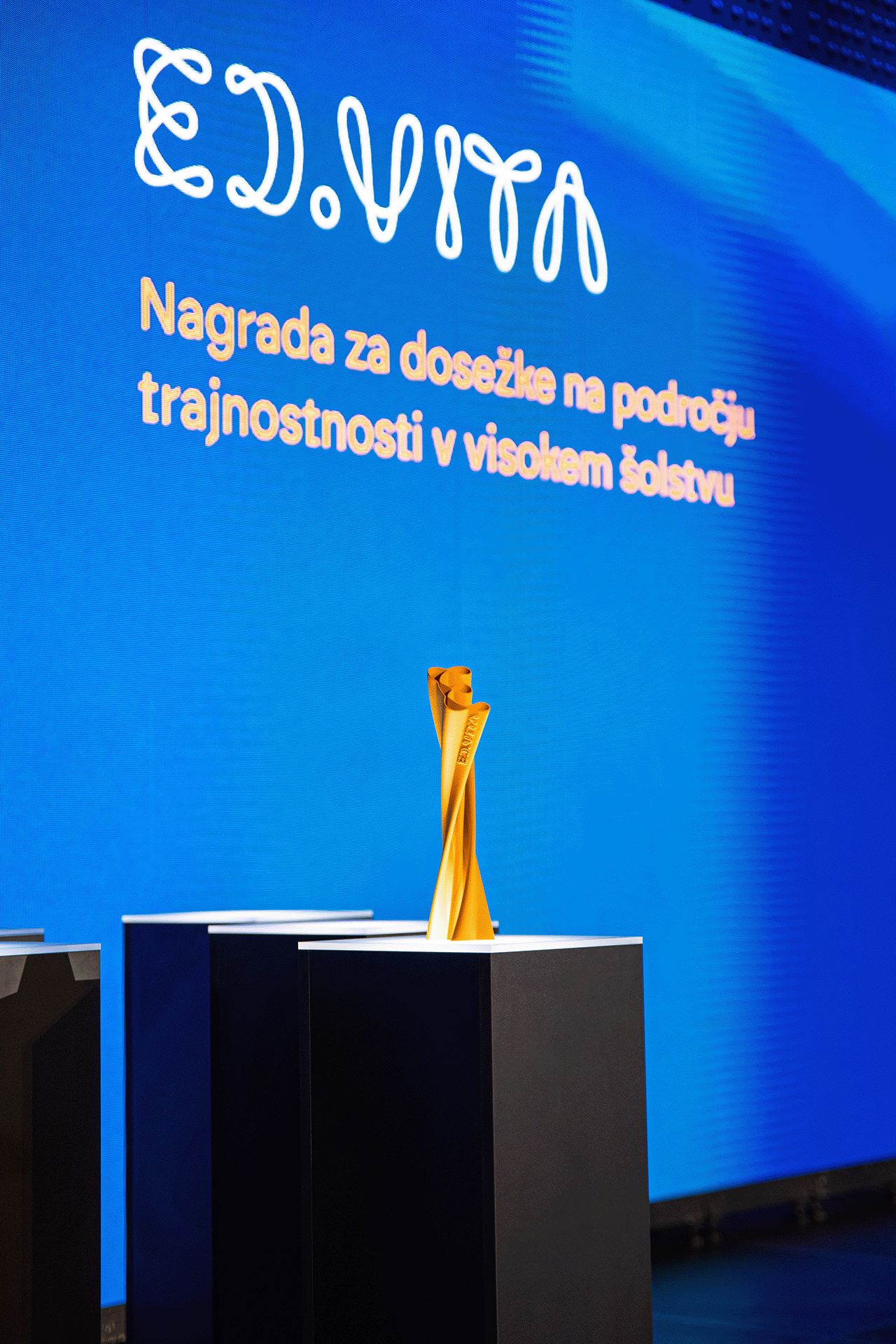
A photo of the grand award 3D printed ED.VITA trophy on stage at the Sustainability in Education Award ceremony.

ED.VITA

ED.VITA Award Trophy Design

Designed and produced to return.

The award trophy is derived from the same design elements and conceptual foundations as the overall visual identity. Its form reflects the symbolism of circulation, infinity and connection, while also evoking motivation, exploration, interweaving and organic development.

The trophies are conceived as a systemic solution – they differ according to the award category, yet maintain a consistent design language.

Particular attention was given to sustainability throughout the design process. We examined ways to reduce impact across all stages – from materials and production to transport and supply. As a fully sustainable or regenerative solution could not be achieved, the best possible compromise was consciously selected.

The use of contemporary three-dimensional digital technology represents a step towards more sustainable practices in the future. The object can be industrially composted, allowing the material to return to the natural cycle.

Year: 2026

Brand identity  |  Product design  |  Sustainability